3 reasons the war between the US, Israel and Iran is headed for a frozen conflict
- Written by Jessica Genauer, Academic Director, Public Policy Institute, UNSW Sydney
With a shaky ceasefire in place between the US, Israel and Iran – and little progress on talks to resolve the complex issues at the heart of the war – where is this conflict going?
The most likely scenario is a frozen conflict.
A frozen conflict is not static, but is an unresolved war that continues at a low-level[1] below the threshold of full-scale combat.
This typically occurs when a comprehensive political agreement cannot be reached, such as the fighting in eastern Ukraine[2] from 2014 until Russia’s full-scale invasion in 2022. This conflict was considered frozen despite the deaths of some 14,000 military personnel and civilians[3] and persistent cyber and information warfare[4].
Even if negotiations resume this week in Pakistan and an eventual agreement is reached, there are still three reasons we believe this is headed towards a frozen conflict, not a comprehensive peace agreement.
1) Trump equates ceasefires with an end to war
US President Donald Trump’s approach to foreign policy has shown he does not treat ceasefires as pauses for negotiations to agree on substantive political issues. Rather, he declares a ceasefire as a US success, then moves on to the next global issue.
Trump claims to have ended ten wars[5], including the current conflict with Iran and Israel’s war in Lebanon. A closer look[6] reveals that in most of these conflicts, a shaky ceasefire has held while substantive issues remain unresolved.
This has left frozen conflicts in place with ongoing tensions. In India and Pakistan, which engaged in a brief armed conflict last year, for example, there is a continued risk of renewed hostilities[7]. And a lasting peace between Thailand and Cambodia after last year’s border spats remains elusive[8].
Yet, Trump has walked away from these conflicts and claimed an end to war as soon as a cessation of major hostilities was in place.
2) Asymmetric wars are difficult to resolve
The current war is asymmetric because of the huge difference in military strength between the US and Israel on one side, and Iran on the other.
Iran has intentionally used asymmetric tactics[9] to counter the US’ overwhelming military power, including targeting infrastructure in Persian Gulf countries not involved in the war and closing the Strait of Hormuz to commercial shipping traffic to disrupt the global economy.
Research shows asymmetric wars are inherently protracted and often open-ended[10]. As a result, they are more likely to end in a frozen conflict than an enduring political settlement.
The reason for this is simple. The weaker actor cannot win a conventional military battle against the stronger actor. So, it tries to exhaust the more powerful nation[11] with political, economic and psychological pressure, forcing a withdrawal and cessation of hostilities.
This is what we are seeing now between the US and Iran. Trump is feeling these rising pressures and is pursuing a ceasefire[12], while trying to claim a US victory.
Iran, meanwhile, has agreed to a ceasefire in a bid for survival as the weaker actor[13], rather than a commitment to an enduring end to the conflict.
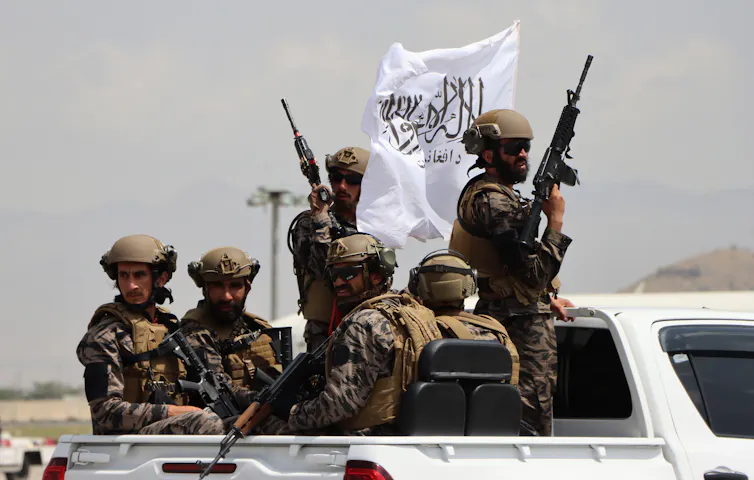
This is reminiscent of the Taliban in Afghanistan, who survived 20 years[14] in a frozen conflict with the US before taking back control of the country when the US withdrew.
3) There’s been no focus on the more complex issues
Neither the US nor Iran appears committed to any long-term resolution of the underlying tensions at the root of the conflict. Key among these is the question of Iran’s nuclear program.
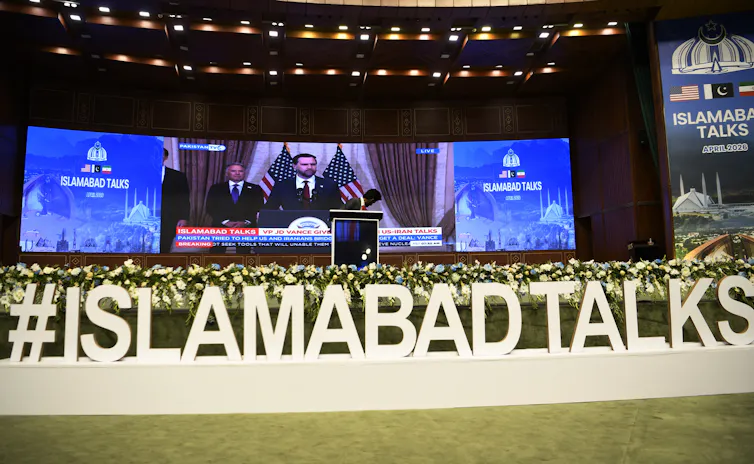
For Washington, the first round of peace talks in Pakistan on April 11–12 were aborted because Iran refused to compromise on its nuclear program[15]. And Iran has long argued it has an inalienable right[16] to enrich uranium for civilian purposes.
The negotiations that led to the multilateral 2015 deal on Iran’s nuclear program – the Joint Comprehensive Plan of Action – took 20 months to conclude. Trump withdrew[17] from the agreement[18] three years later, calling it[19] a “horrible one-sided deal”.
Given this history, a quick and clear resolution to this complex dispute is unlikely.
Some analysts believe the US and Iran could announce a partial agreement[20] that would leave many of the technical aspects to be ironed out later.
But Trump is now facing an opponent that is unlikely to become more accommodating with respect to its long-term “nuclear rights[21]”. In fact, Iran has already shown its resolve by asserting a new geostrategic normal, closing the Strait of Hormuz and disrupting the global economy.
What a frozen conflict means for the region
The Iran-US war may conclude with a series of ceasefires, but will likely remain a frozen conflict due to these underlying tensions. This means more threats from both sides over Iran’s nuclear program and periodic flare-ups of violence between Israel and Iran, the US and Iran, or both.
This is much like the frozen situation in Gaza. Last October, Israel and Hamas agreed to a ceasefire under Trump’s 20-point peace plan. The first phase of the plan was then largely implemented, leading to a hostage-prisoner exchange, a decrease in Israel’s heavy bombardments of Gaza and a resumption of aid into the strip.
However, there has since been no progress[22] on the more complex questions of the post-war governance of Gaza, redevelopment of the strip and – crucially – the disarmament of Hamas fighters. As a result, Israel has refused[23] to completely withdraw its troops and violence has continued[24].
Read more: Israel and Lebanon have a ceasefire, but global attention shouldn’t move on. This isn’t a tidy end to the war[25]
From a historical perspective, the frozen conflict in the Koreas is also instructive. The war ended with an armistice in 1953[26] and no peace treaty, effectively leaving North and South Korea at war to this day. This led to the North developing an underground nuclear weapons program that continues to pose a threat to the world.
Similarly, the decades-long frozen India-Pakistan conflict has led to an arms race (including the development of nuclear weapons[27] on both sides), instability in South Asia and periodic flare-ups of violence.
A frozen conflict between the US, Israel and Iran will no doubt create similar long-term instability in the Middle East, including a possible arms race[28] in the Middle East and more flare-ups of violence, particularly around control of the Strait of Hormuz.
References
- ^ low-level (now.tufts.edu)
- ^ fighting in eastern Ukraine (www.lse.ac.uk)
- ^ 14,000 military personnel and civilians (www.crisisgroup.org)
- ^ cyber and information warfare (css.ethz.ch)
- ^ ten wars (www.theguardian.com)
- ^ A closer look (theconversation.com)
- ^ risk of renewed hostilities (www.chathamhouse.org)
- ^ remains elusive (www.gisreportsonline.com)
- ^ intentionally used asymmetric tactics (theconversation.com)
- ^ inherently protracted and often open-ended (www.rand.org)
- ^ exhaust the more powerful nation (www.jstor.org)
- ^ pursuing a ceasefire (politico.com)
- ^ bid for survival as the weaker actor (warontherocks.com)
- ^ survived 20 years (ppr.lse.ac.uk)
- ^ nuclear program (time.com)
- ^ inalienable right (www.csis.org)
- ^ withdrew (trumpwhitehouse.archives.gov)
- ^ agreement (www.armscontrol.org)
- ^ calling it (trumpwhitehouse.archives.gov)
- ^ a partial agreement (www.smh.com.au)
- ^ nuclear rights (www.iranintl.com)
- ^ no progress (theconversation.com)
- ^ refused (www.aljazeera.com)
- ^ violence has continued (www.reuters.com)
- ^ Israel and Lebanon have a ceasefire, but global attention shouldn’t move on. This isn’t a tidy end to the war (theconversation.com)
- ^ armistice in 1953 (www.bbc.com)
- ^ development of nuclear weapons (armscontrolcenter.org)
- ^ arms race (www.dw.com)