How to choose the right timber decking for your home or project
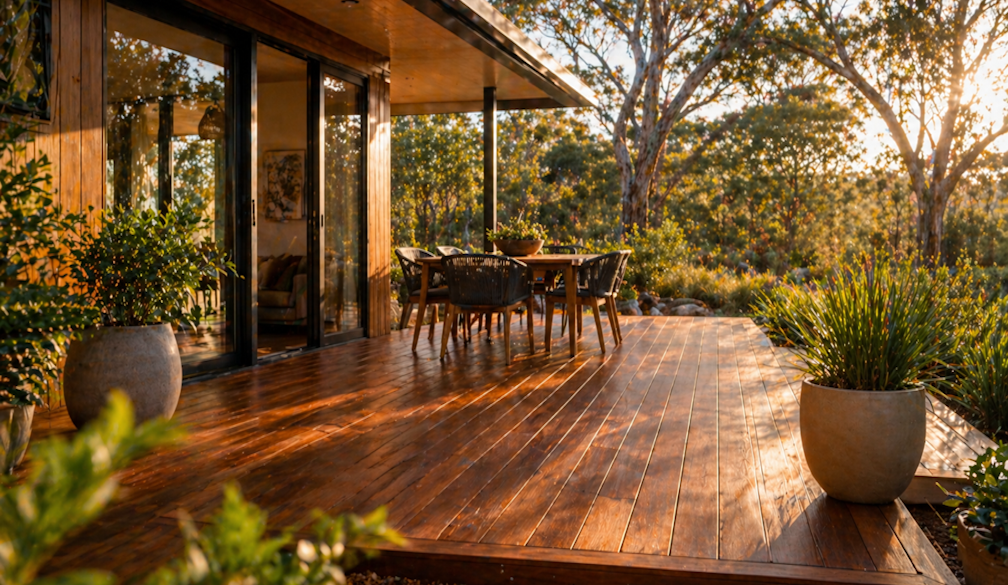
Timber decking is one of the highest-impact home improvements you can make — but the species, profile, and fixing method you choose will determine how well it performs for years to come. This guide walks through the decisions that matter, from choosing the right hardwood for your climate through to understanding the practical differences between Classicplank, Metroplank, and Marineplank profiles.
A deck done well becomes one of the most-used spaces in an Australian home. It extends your living area into the outdoors, bridges the gap between garden and interior, and adds a warmth that no composite or paved surface can replicate. A deck done poorly peels, cups, splinters, and starts looking tired within a season or two.
The difference usually comes down to decisions made before a single board is fixed — the species you choose, the profile that suits your conditions, and how the deck is installed. Australian hardwoods are genuinely exceptional decking materials, but not all of them suit every application, and not all profiles suit every homeowner.
This guide is for homeowners planning a new deck, renovators looking to upgrade, and architects and designers specifying timber decking for residential or commercial projects. It covers what to look for in a decking hardwood, how the main Australian profile options compare, and what questions to ask before you commit.
Why Australian hardwood is the right starting point
Before comparing profiles and fixing systems, it's worth understanding why premium hardwood timber remains the standard against which every other decking material is measured.
Composite decking has improved considerably over the past decade, but it still struggles to replicate the depth, warmth, and character of real timber. It can feel hollow underfoot, fade unevenly in harsh UV, and in most cases lacks the genuine Class 1 durability that Australian hardwoods achieve naturally — without any treatment. With timber, what you're getting is a product that's been refined over millions of years to resist the very conditions Australian summers deliver.
Species selection matters significantly. Spotted Gum, with a density of 990 kg/m³ and a Class 1 durability rating, is one of the hardest-wearing options available and is naturally fire and termite resistant — a material that's expected to last longer than 40 years above ground. Jarrah, sourced exclusively from regrowth forests in Western Australia, brings rich reddish-brown tones and exceptional durability, including natural marine borer resistance for coastal applications. Pacific Teak (also known as New Guinea Teak) combines a durability Class 2 rating with outstanding stability — it naturally weathers to silver without cupping or warping, making it a popular choice for homeowners who want low maintenance above all else.
All quality hardwood decking should come from sustainably managed forests. PEFC certification is the benchmark — it ensures responsible forestry practices and full chain of custody from forest to site.
The three profile options and what makes each one different
Australian hardwood decking is available in several engineered profiles, each designed to address specific conditions and installation preferences. The three most widely used are Classicplank, Metroplank, and Marineplank.
Classicplank: the classic, reliable choice
Classicplank Decking is a flat-surface, face-fixed decking profile installed using a traditional top-screw method. Boards are fixed through the surface into the joist — a familiar installation process that any qualified carpenter, landscaper, or decking contractor can complete without specialist knowledge.
What sets quality Classicplank apart from generic flat decking is the engineering behind the board. Anti-cup grooves on the underside reduce dry rot, eliminate cupping, and allow the timber to breathe between joists. A closely monitored kiln drying process ensures the decking stays flat and stable over time. And prior to delivery, the product is coated four sides in high-quality timber preservative through a pre-finishing process — providing protection to every surface, including the underside that's hardest to reach once the deck is laid.
Classicplank is available in a wide range of timber species and board sizes, from residential applications through to boardwalks and large-scale commercial projects. If a standard size doesn't suit your project, custom profiles are available.
Metroplank: concealed fixing for a refined finish
Metroplank Decking takes the classic hardwood deck and removes the visible fixings entirely. A clever clip design allows boards to be fastened from below — no screws breaking the surface, no potential for fixings to work loose over time, and no sharp edges that can catch bare feet.
The clip system does more than just hide the hardware. It's designed to allow for the natural movement of timber as it responds to seasonal changes in temperature and humidity. Rather than fighting that movement — as a rigidly fixed board must — Metroplank accommodates it, which increases durability and reduces the risk of warping or splitting over the life of the deck.
There's a practical efficiency benefit too. Conventional decking requires twice as many screws as Metroplank's fastening clip system, which secures two boards at once with a single screw. That translates to direct savings on both materials and labour without any compromise on structural integrity.
Metroplank is available in a wide range of premium hardwood species including Jarrah, Ironbark, and Pacific Teak, and can be supplied pre-oiled using Cutek CD50 — a penetrating oil specifically designed for exterior applications that controls moisture within the timber to minimise warping and extend longevity.
Marineplank: engineered for the toughest Australian conditions
For decks that will be exposed to harsh weather, heavy foot traffic, poolside moisture, or coastal salt air, Marineplank Decking is the specification of choice. It's Australia's most popular decking profile precisely because it was designed for Australian conditions.
The key difference between Marineplank and flat decking profiles is the precision-milled domed surface. That slight curve accelerates water run-off, keeping the surface drier and significantly reducing the risk of dry rot developing beneath the board. In Australia's cycles of hot dry summers and wet winters, this engineering detail has a genuine impact on how long a deck lasts and how much maintenance it requires.
Marineplank is face-fixed through the traditional screw-through method, which experienced installers find quick and straightforward. The profile has been used on large-scale commercial projects including Perth Stadium and Mandurah Forum, as well as across thousands of residential pools, alfresco areas, and coastal properties. Available across multiple Australian and American hardwood species, it can be supplied pre-oiled or uncoated depending on project requirements.
Choosing the right timber species for your environment
Species choice should follow the environment your deck will live in, not just the aesthetic you're drawn to.
For coastal locations or any decking close to salt water, look for naturally dense, tight-grained species with proven marine resistance. Jarrah's natural marine borer resistance makes it an exceptional choice for jetties and coastal structures, while Pacific Teak's high oil content and dimensional stability make it a low-maintenance performer in salt air environments.
In bushfire-prone areas, fire rating matters. Spotted Gum, Ironbark, and Blackbutt are all certified as bushfire-resisting timbers under AS 3959, with minimum density requirements met for BAL-19 and BAL-29 compliance. This is worth confirming with your supplier before species are finalised.
For covered or semi-exposed applications — verandahs, alfresco areas, shaded entertaining spaces — there's more flexibility on species without sacrificing longevity. Jarrah and Vic Ash are both available at more accessible price points while still delivering decades of reliable performance in sheltered settings.
Maintenance: what to realistically expect
All premium hardwood decking requires periodic maintenance, but the frequency and effort involved varies by species, finish, and exposure.
Most hardwood decking boards benefit from re-oiling every 12 to 18 months to maintain colour and protection. Using a quality penetrating oil such as Cutek CD50 is the most effective approach — it controls moisture within the timber rather than sitting on the surface, which means it doesn't peel or flake. Boards that arrive pre-oiled from the factory are already protected on all four sides, reducing the initial on-site preparation required.
In practice, the biggest predictor of how much maintenance a deck needs is not the species but the conditions. A north-facing, fully exposed deck in Queensland's summer sun will need more attention than a sheltered Perth alfresco that's under a pergola most of the year. Choosing a profile designed for exposure — Marineplank in particular — reduces the maintenance load in demanding conditions.
Frequently asked questions
Which timber decking profile is best for a poolside deck?
Marineplank is the most appropriate choice for poolside applications. Its precision-milled domed surface accelerates water run-off, keeping the underside drier and reducing the risk of decay in wet, high-traffic areas. Species that perform particularly well in wet and coastal environments include Spotted Gum, Pacific Teak, and Jarrah — all naturally resistant to moisture and decay.
How often does timber decking need to be re-oiled?
Most hardwood decking benefits from re-oiling every 12 to 18 months to maintain colour and protect the timber surface from moisture and UV damage. The exact frequency depends on exposure — a fully exposed coastal deck may need attention annually, while a sheltered verandah can typically go longer between treatments. Using a penetrating oil rather than a surface coating gives better long-term results and avoids the peeling and flaking common with film-forming finishes.
Is concealed-fix decking worth the additional cost?
For residential projects where the visual finish is a priority, Metroplank's concealed clip system delivers a cleaner, more refined result than face-fixed profiles. Beyond aesthetics, the clip design accommodates natural timber movement better than rigid surface fixing, which can extend the life of the deck. The reduction in screws required also partially offsets the cost difference at installation.
What timber species are suitable for bushfire-prone areas?
Spotted Gum, Ironbark, Blackbutt, and Jarrah are all suitable for bushfire-prone areas and are listed as bushfire-resisting timbers under AS 3959. The specific BAL rating achievable depends on the species, fixing method, and construction details. Always confirm BAL compliance with your supplier and confirm the requirements for your specific site assessment before finalising species selection.
Ready to plan your timber decking project? Request samples and a product pricing guide to get your project moving in the right direction.