Why does chocolate cost so much this Easter, when cocoa’s price is at a 3-year low?
- Written by Vinh Thai, Professor of Logistics and Supply Chain Management, School of Accounting, Information Systems and Supply Chain, RMIT University
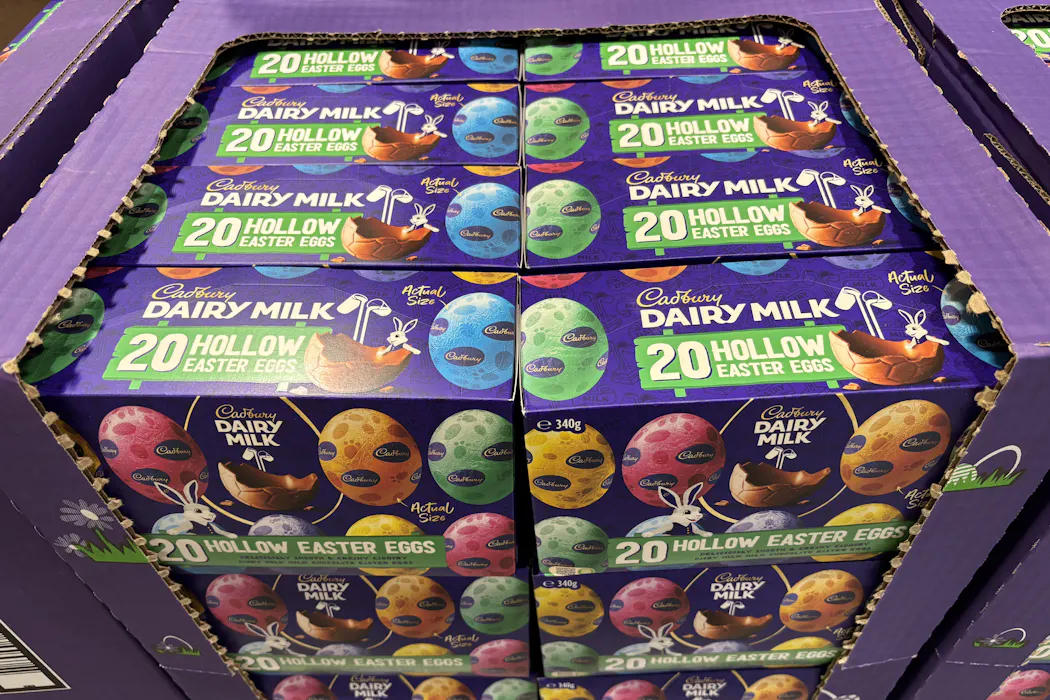
An Easter bunny for $10. A box of 20 hollow Easter eggs for $18. A 100g block of plain dark chocolate for $8.50.
Even last year, such high prices wouldn’t have been surprising. Cocoa prices spiked to all-time highs above US$12,000 per ton[1] in 2024.
But the price of cocoa then fell through most of 2025. It was trading at around US$3,165 per ton[2] on March 28, back to where it was around three years ago.
Why doesn’t that lower cocoa price mean cheaper chocolates on our shelves this Easter?
What’s the price of cocoa now?
Cocoa prices began rising in 2023, but really took off in early 2024, surging to an all-time high. That rate of growth was even faster[3] than the US stock market and cryptocurrency bitcoin.
There were multiple factors behind that sharp rise. These included intense rains and heat[4] hitting harvests in West Africa – which grows around two-thirds[5] of the world’s cocoa – as well as disease, fertiliser issues, and other supply disruptions. The United Nations Trade and Development agency said climate change contributed[6] to those smaller harvests and rising costs.
Since then, cocoa’s price has come down significantly – though after a price bounce only last month, industry website Confectionery News warned[7]:
For manufacturers, the latest price swing is yet another reminder that volatility is the new normal in cocoa markets.
Cocoa-free chocolate
Confectionery makers have responded to the last few years of higher prices by reformulating more of their products[8] to use less cocoa.
Many of the world’s biggest chocolate makers[9] are working on lab-grown, fermented and upcycled “cocoa”[10] – or even cocoa-free chocolate[11].
But that work to research and develop cocoa alternatives also comes with a cost. We’re yet to see how commercially viable those alternatives will be.
What about the price of chocolate?
It’s understandable why consumers get frustrated with higher chocolate prices – especially at Easter, the biggest chocolate sales period of year[12].
And, as consumer advocates have long pointed out[13], Easter chocolates often come with a higher price tag. Consumer group Choice’s latest annual assessment[14] of Easter egg prices found some chocolate eggs on sale this Easter are smaller but more expensive for the second year in a row.
But this Easter, shoppers may be asking another question – given cocoa costs have plunged, why hasn’t the shelf price of all chocolates on our supermarket shelves also fallen?
The short answer is time.
While the current price of cocoa is down from its highs, even as recently as December last year, the price was about double what it is now.
Especially for the biggest producers, at least some of the cocoa or cocoa products used to make chocolate being sold now would have been bought when prices were still at much higher levels.
Some key cocoa products used in chocolate making, such as cacao nibs[15], can last for many years[16] if stored in the right cool, dry conditions.
When large commercial chocolate makers are calculating their profits and losses, and setting their chocolate prices, they have to factor in what they’ve already paid for ingredients – not the current prices.
In other words, it’s still too soon to expect the full savings from the recent cocoa price drop to be passed on.
Cocoa is also not the only cost to consider in chocolate prices. While some other key ingredients such as sugar[17] have come down in price in recent years, others such as vegetable oil[18] (often used as a cheaper alternative[19] to cocoa butter) have risen. Then there’s everything from labour and energy costs, to packaging and transport.
Think about packaging alone. If you buy chocolates with any kind of plastic packaging, that plastic was made from petrochemicals. Those petrochemicals are derived from oil and natural gas, and are crucial in making up more than 6,000 everyday products[20].
As a result of the Middle East war, packaging makers have already warned consumers[21] to expect price hikes on future food, groceries and medications because of “unprecedented disruptions” to resin supplies, used to make plastic.
The outlook for chocolate prices
There is some good news. The International Cocoa Organization has reported global cocoa supplies[22] are back in surplus again, thanks to better weather[23]. An even bigger surplus[24] is forecast for the 2025-26 growing season.
There’s also been slower demand[25] for cocoa, which could keep the price at lower levels.
Looking ahead, it is possible we could see some slight reduction in chocolate prices towards the end of 2026 and moving into 2027.
But chocolate is also a perfect example of just how our global food systems are closely intertwined with much bigger geopolitical and logistical factors. Like so much else, what we pay for chocolate next year will depend at least partly on how long the current Middle East war and global oil crisis drags on.
Read more: What’s the difference between Easter egg chocolate and regular chocolate?[26]
References
- ^ US$12,000 per ton (www.bloomberg.com)
- ^ around US$3,165 per ton (tradingeconomics.com)
- ^ was even faster (www.marketwatch.com)
- ^ intense rains and heat (salatainstitute.harvard.edu)
- ^ around two-thirds (ourworldindata.org)
- ^ climate change contributed (unctad.org)
- ^ Confectionery News warned (www.confectionerynews.com)
- ^ reformulating more of their products (www.foodingredientsfirst.com)
- ^ the world’s biggest chocolate makers (www.confectionerynews.com)
- ^ lab-grown, fermented and upcycled “cocoa” (www.abc.net.au)
- ^ cocoa-free chocolate (www.confectionerynews.com)
- ^ biggest chocolate sales period of year (theconversation.com)
- ^ long pointed out (www.choice.com.au)
- ^ latest annual assessment (www.choice.com.au)
- ^ cacao nibs (cocoasupply.com)
- ^ many years (cocoasupply.au)
- ^ sugar (tradingeconomics.com)
- ^ vegetable oil (tradingeconomics.com)
- ^ cheaper alternative (www.sciencedirect.com)
- ^ more than 6,000 everyday products (www.energy.gov)
- ^ warned consumers (www.theaustralian.com.au)
- ^ global cocoa supplies (www.icco.org)
- ^ better weather (finance.yahoo.com)
- ^ even bigger surplus (think.ing.com)
- ^ slower demand (www.confectionerynews.com)
- ^ What’s the difference between Easter egg chocolate and regular chocolate? (theconversation.com)
Authors: Vinh Thai, Professor of Logistics and Supply Chain Management, School of Accounting, Information Systems and Supply Chain, RMIT University